Built Saudi Arabia's First In-App Car Rental Extension
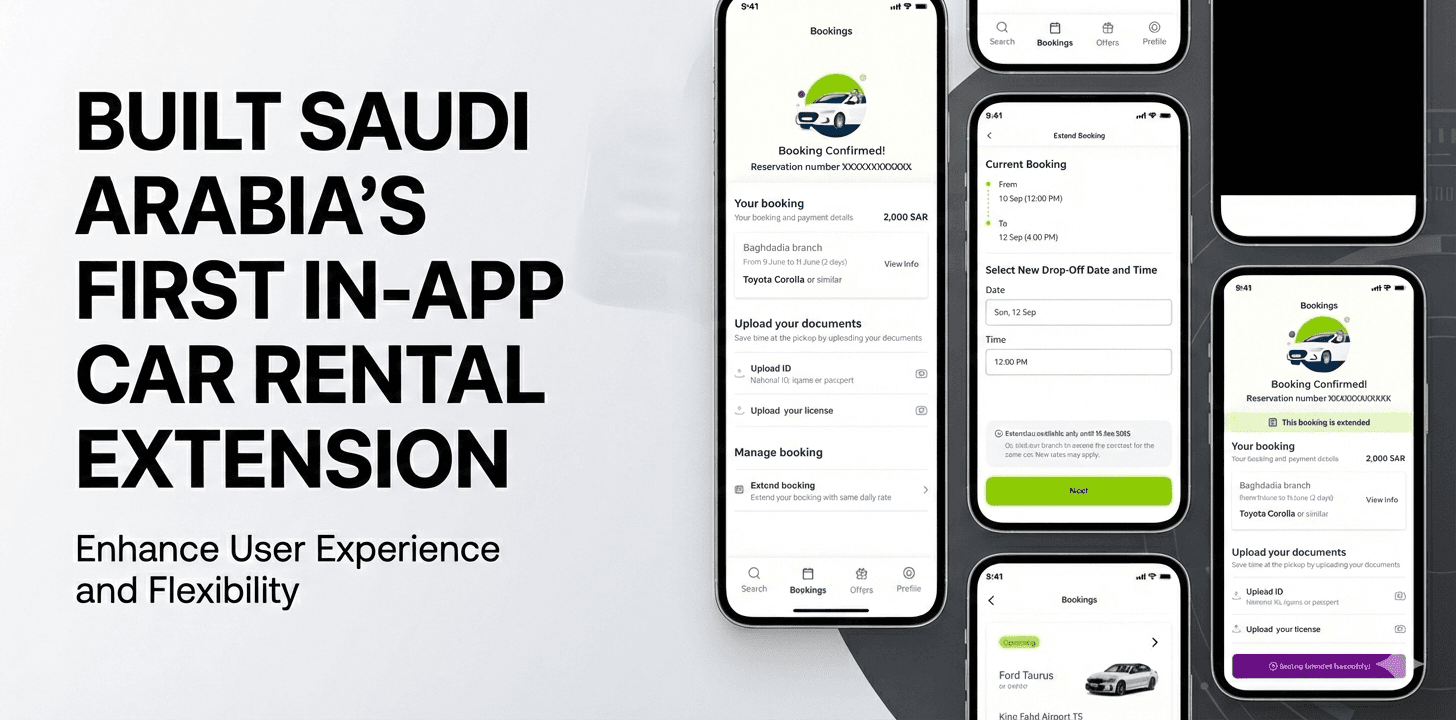
The Small Button That Changed How People Rent Cars
Here's a question I couldn't stop thinking about: Why is extending a car rental harder than ordering pizza?
You can add toppings, change delivery addresses, and modify your order with a few taps. But extending a car rental? That meant driving back to where you started, waiting in line, and hoping they still had your car available.
It made no sense.
This is the story of how we added one small feature—an "Extend Booking" button—and accidentally changed how people think about car rentals in Saudi Arabia.
What I Saw (The Real Problem)
I remember talking to a customer through one of my regular interview session. He'd just finished a business trip that ran longer than expected. Simple problem: he needed his rental car for two more days.
His solution? Call the support and surprised they want him to drive back to the branch A 5-hour detour just to click "extend" in someone else's system plus some waiting on queue.
"I almost just kept the car and dealt with the late fees," he told me. "It would've been less of a headache."
That's when it clicked for me: We weren't just causing inconvenience. We were breaking the entire promise of car rental—freedom.
When I dug into the data, the picture got clearer:
- People were driving hours out of their way just to extend bookings, cities in KSA is far to each others
- Some were returning cars early because extension was too hard
- Others were just keeping cars late and paying penalties
- Our staff spent hours processing extensions that could've been automatic
The question wasn't "How do we make extensions easier?"
It was: "Why are we making people come back at all?"
What We Built (The Simple Part)
The idea was almost embarrassingly simple: Put an "Extend" button in the app.
But as anyone who's built products knows, simple ideas hide complex execution. Here's what made it work:
The Experience We Wanted
Imagine you're on a road trip. Your phone buzzes:
"Your rental ends tomorrow at 2 PM. Need more time?"
Two buttons: "I'm good" or "Extend booking"
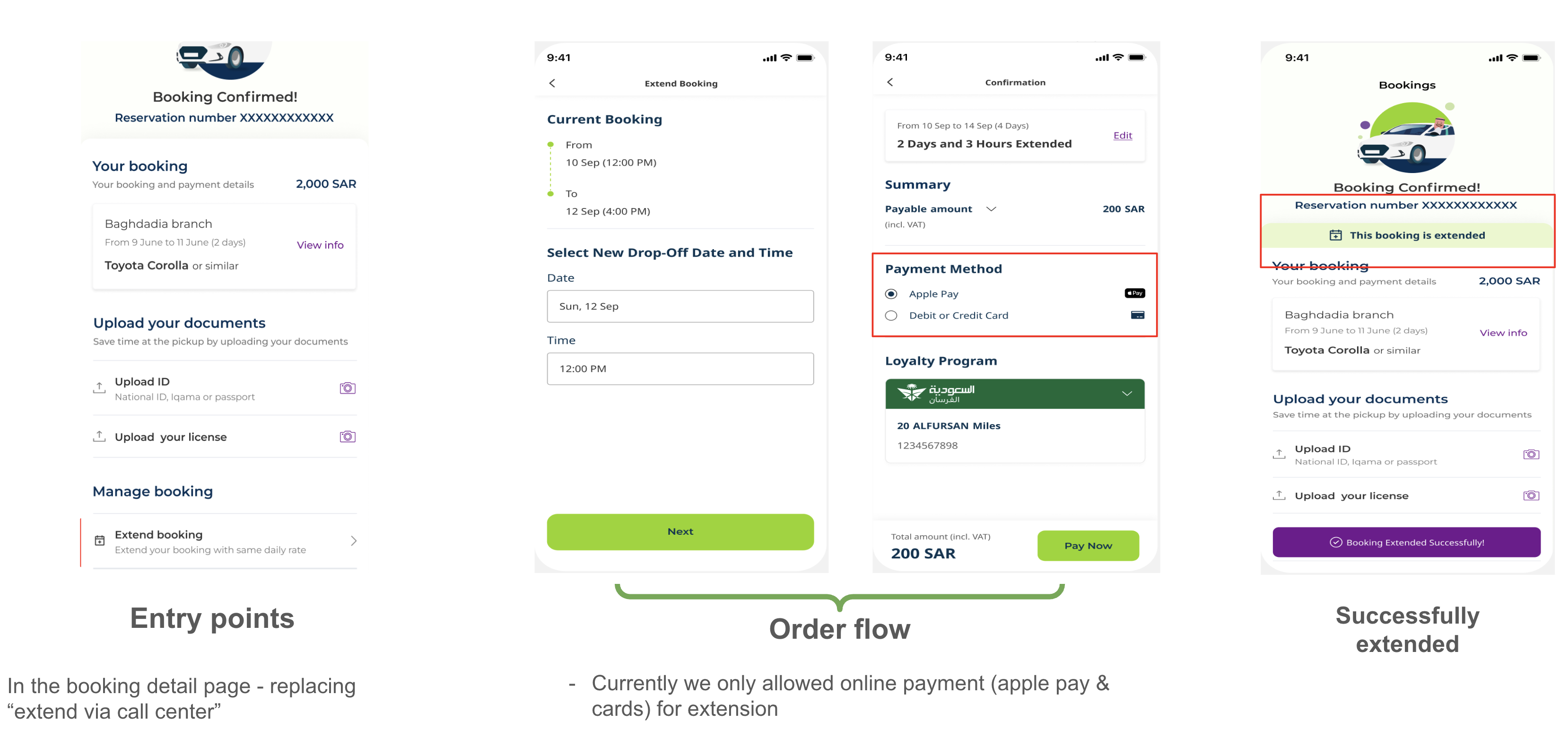
You tap "Extend," pick a new end date, see the price, pay with one tap, and keep driving.
That's it. No detours. No queues. No paperwork.
Making Pricing Feel Fair
Here's where it got interesting. We could've just charged per extra day. But that felt wrong for someone who needed 3 more hours versus someone needing 3 more days.
So we created three simple rules:
Under 2 hours? Free. We call it the "grace period." Life happens, flights get delayed, meetings run long. We've got you.
2 to 6 hours? Pay by the hour. Fair is fair.
More than 6 hours? Daily rate kicks in. Makes sense for longer extensions.
The first time someone saw "This is on us!" for a 90-minute extension, I knew we'd gotten it right. That message wasn't just good business—it was surprising and delightful.
Where People Found It
We didn't bury this feature in settings. We put it everywhere it made sense:
- A notification the day before your booking ends
- Right on your active booking list
- On the booking details page
The principle: If you're thinking about extending, we should be making it easy, not making you hunt.
The Hard Parts (Reality Check)
Building this taught me that small features often hide big complexity. Here's what kept me up at night:
Getting Everyone on Board
Here's something I underestimated: Branch managers were nervous.
"What if someone extends a car that's suppose to be for another customer?" "What if the payment fails?" "What if...?"
Valid concerns. We built automated checks, real-time notifications, and a dashboard they could trust. But more importantly, we spent time listening to their fears and addressing them one by one.
The feature didn't work until everyone—from engineers to branch staff—believed in it.
Government integration we never see coming
This one was just hard, still a culture shock for me. Turn out all the rental car need to be reported to the government through their system, extending the rental agreement will also need to tell the system. However, it is a manual activity on the government webapp, no expose API no automation.
This is real, we move back to the ops team. now we will tell them not only to notify but ask them to act immediately when customer submitting their extension. So, they will not received call from the police or got accused for stealing car.
Newcomer problem, always assume small feature but under estimate the complexity.
The Awareness Problem
You can build the perfect feature, but if no one knows it exists, does it matter?
We tried everything:
- Notifications (worked great)
- Updating our checkout page to mention it (subtle but effective)
- Training customer service to tell people about it (hit or miss)
- In-app tours (people skipped them)
What actually worked? People start noticing it and using it again and again
What Happened (The Surprising Part)
We launched on January 19, 2024. iPhone users first, then everyone else a few weeks later.
The First Week
86 people extended their bookings. Only 12 paid anything—most were in the grace period.
I was nervous. Was anyone actually going to use this?
Then Something Clicked
Month two: 247 extensions.
Month three: 447 extensions.
That's a 190% jump in one month. People weren't just using it—they were telling others about it.
By the end of the year:
- 4,700+ people had extended their bookings without visiting a branch
- Over SAR 2.6 million in extensions (around $690,000 USD), almost half of the revenue we get from the online booking
But the numbers don't tell the real story.
What Actually Changed
Before: People planned their rentals conservatively. "I'll book 3 days, even though I might need 4, because extending is such a pain."
After: People started booking exactly what they needed, knowing they could adjust on the fly.
One customer told our support team: "I used to stress about booking the right number of days. Now I just book what I think and extend if my plans change. It's like the car works around my schedule, not the other way around."
That's when I realized: We didn't just add a feature. We changed how people think about renting cars.
What I Didn't Expect
I thought extension impact stop there, the extension feature only accept in-app payment (online by cards). Before, we use to only get 35-40% online payment rate for bookings. After this feature got more populer, we see impact on out other metrics, the Paid booking increase to 42-50%.
Then I realized, now people trust us more because they are happy with the experience.
Looking Back (What It All Means)
Years later, I was watching my app review dashboard and come up with one review saying,
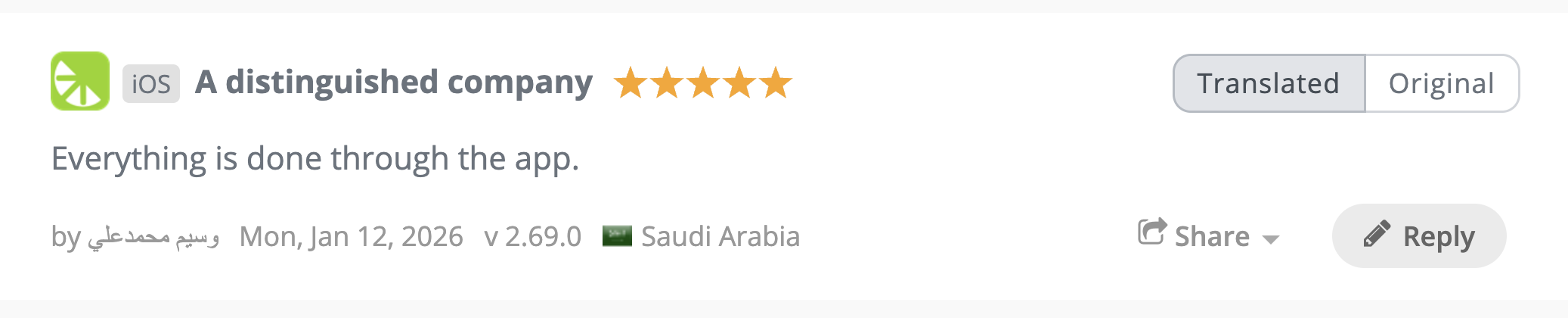
That's when it really hit me.
We didn't just build a feature. this first feature I shipped as a new joiner, really prove it a small feature matters. Today we have many more feature accessible in the app. still long way to go
The Power of Small
I started this project thinking we needed something big to make a difference. A complete platform overhaul. A revolutionary feature set.
But the biggest impact came from the smallest idea: What if people didn't have to come back?
One button. One workflow. One less obstacle between a person and what they want to do.
That's all it took.
What I Think About Now
When I work on new features, I ask myself:
"Am I solving a problem or am I just adding complexity?"
Most features should make something easier, faster, or better. If they don't, why are we building them?
The extend button made life easier. Everything else—the pricing logic, the notifications, the branch integrations—was just infrastructure to support that one simple goal.
Keep the goal simple. Execute it well.
For Other Product People
If you're building something right now, here's what I'd tell you:
Find the smallest thing that removes the biggest friction. Don't build everything. Build the one thing that matters most.
Give things away strategically. That grace period was free. It also built more loyalty than any discount campaign ever could.
Listen to the people doing the work. Branch managers, customer service reps, operations teams—they see things you don't. Include them early.
Ship it and learn. Perfect is a myth. Real is a teacher.
And most importantly: Remember you're building for real people with real lives. Ahmed didn't want a "booking extension solution." He just wanted to not waste half his day driving back to a branch.
Sometimes the best products are the ones that just get out of the way and let people live their lives.